
January 6, 2026
A Pinecrest For Everyone
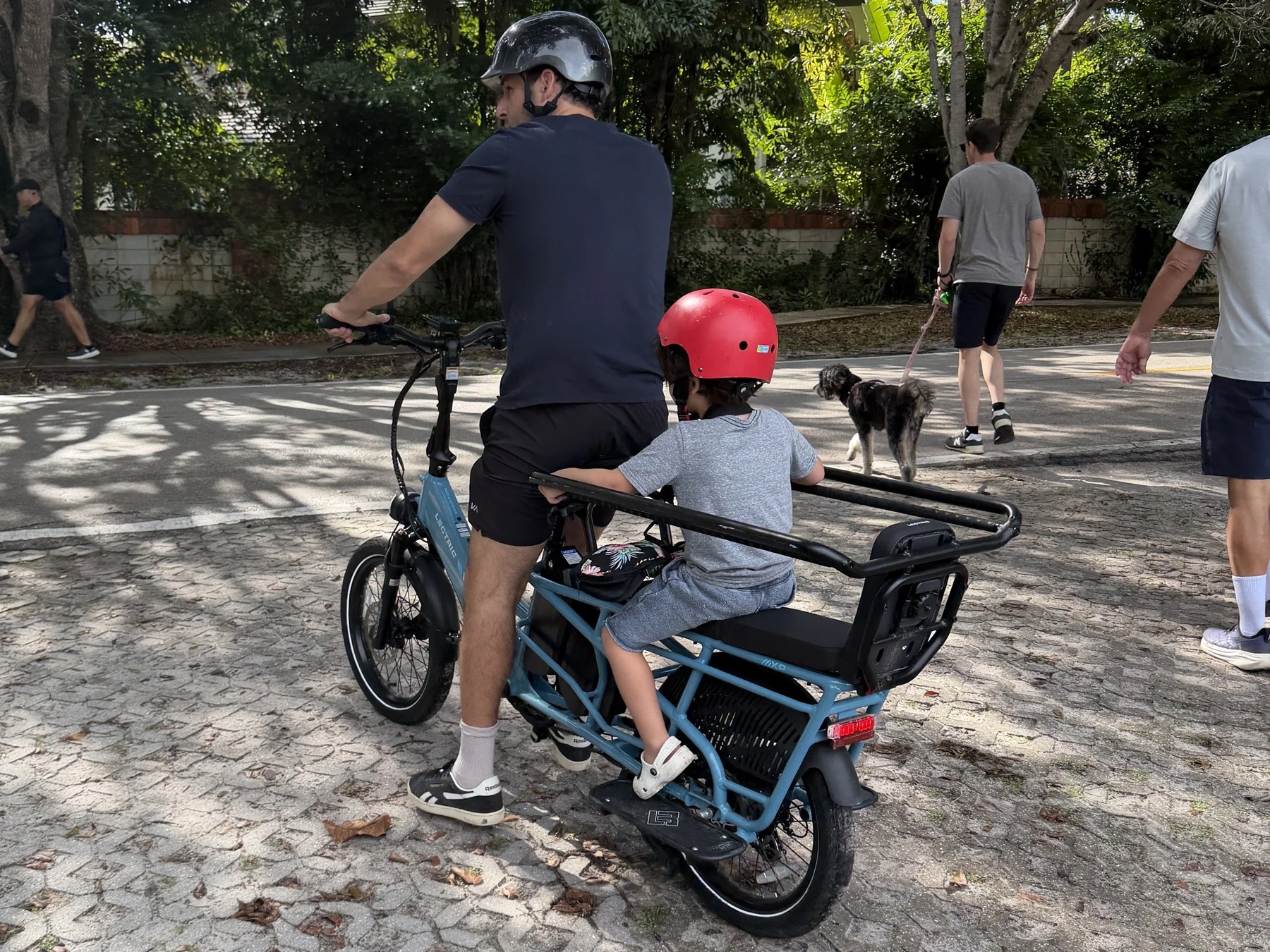
Leaving Pinecrest’s Community Center on a beautiful Sunday morning.
Designing a village around walking and biking isn’t about taking anything away—it’s about giving people more ways to move, connect, and live well. And the benefits reach everyone, no matter how you prefer to get around.
In this article, I talk about the WHY behind wanting a village where it is safe, pleasant, and practical to walk or ride a bike.
If You Hate Traffic
Drivers benefit when more neighbors walk or bike. With fewer cars on the road, driving becomes calmer, less congested, and more predictable. It’s no coincidence that the world’s happiest drivers live in the Netherlands—a country with the highest bike adoption rates on Earth.
If You Are Concerned About Speeding in Your Neighborhood
Towns designed for walking and biking naturally slow cars down. Streets are built to make it difficult—sometimes impossible—to travel at unsafe speeds. Slower streets mean safer streets.
If Community Safety Matters to You
Communities become safer when more people are out and about. You know your neighbors better, and they know you. Pinecrest’s own Watch Group program thrives for exactly this reason: connection builds safety.
If You Care About the Environment
The sustainability case is clear. Mile for mile, an e-bike has roughly one-sixth the carbon footprint of an electric car. Shifting even a portion of short trips to biking makes an outsized difference.
If You Care to Protect Our Tree Canopy
The shade from our tree canopy can lower temperatures by as much as 15 degrees, making biking and walking far more comfortable. Prioritizing active mobility is fully compatible with protecting—and even expanding—our tree canopy.
If You Care About Teen Mental Health
Restoring independence matters. When teens—especially those under 16—can get to school, a Starbucks, or a community activity without relying on adults, it boosts their confidence and reduces stress at home. Walkable, bikeable places give them room to grow and naturally reduce screen time—whether social media or addictive online games—both known to harm mental health.
If You’re a Busy Family Caregiver
Imagine if your kids could safely bike to school, to a friend’s house, or to the park on their own. Many family caregivers would gain as much as two hours every day currently spent driving children everywhere. Independence for them means breathing room for you.
If You Worry About Loneliness—Especially Among Our Older Residents
11% of Pinecrest residents are seniors living alone. Walkable, bikeable communities bring people out of isolation and into daily interaction. A simple “good morning” from a neighbor passing by on a bike can mean everything to someone who might otherwise go days without speaking to anyone. In these communities, connection begins right at the doorstep.
If You’re Concerned About America’s Health Crisis
Active mobility is one of the simplest, most effective ways to improve public health—an absolute no-brainer.
If Inclusivity Matters to You
A bike is a far more affordable and accessible mode of transportation than owning and maintaining a car. A bike-friendly community expands access, opportunity, and dignity.
If You Believe in Freedom of Choice
Why settle for just one viable way to get around? A truly free community offers options—car, bike, walk, or transit—so everyone can choose what works best for each trip.
Building a village for walking and biking isn’t a niche idea. It’s a blueprint for stronger communities, healthier residents, safer streets, and happier families—drivers included.
You don’t need to care about every one of these WHYs, but I’m confident that at least one of them resonates with you.